AI for IT reporting: The complete guide for 2026

Stevia Putri
Last edited April 30, 2026
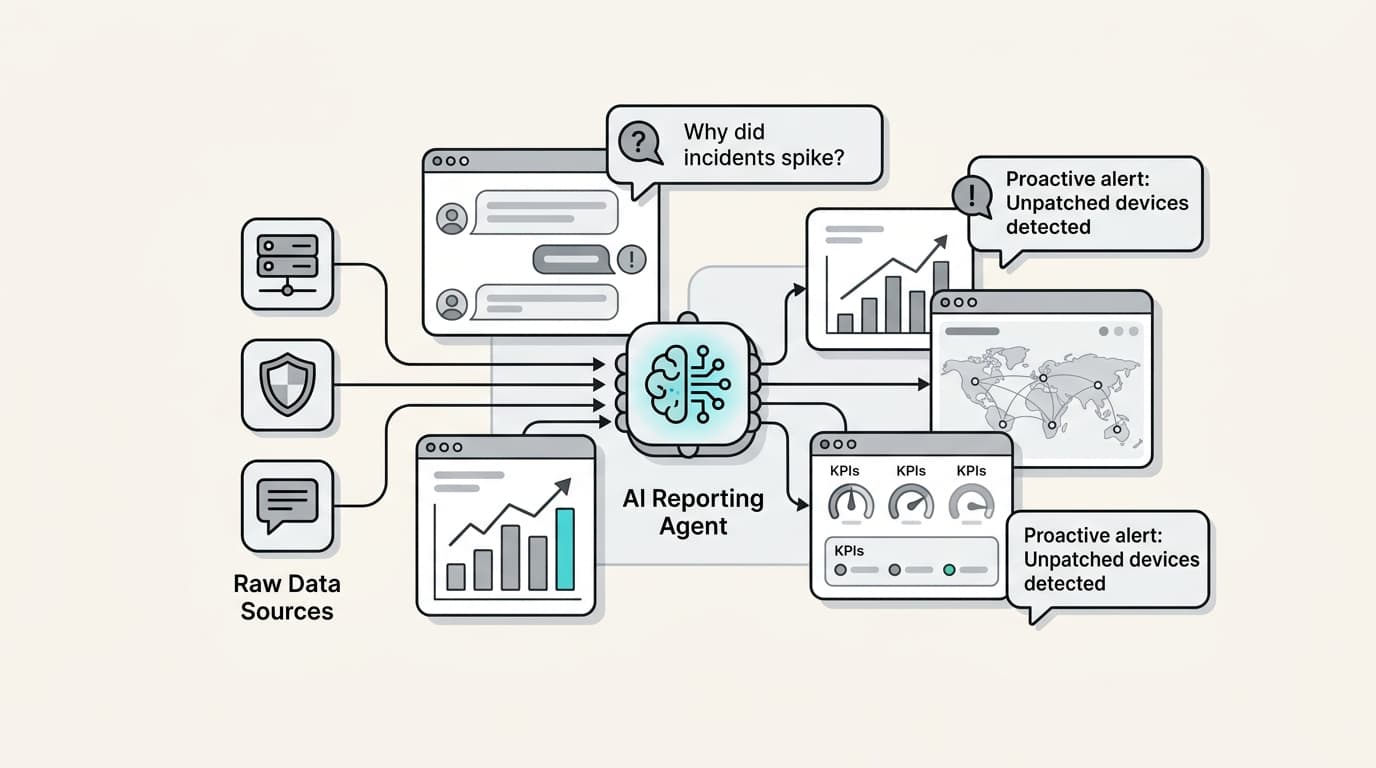
Most IT reporting dashboards stay static while the infrastructure they monitor changes every hour, leaving leaders with month-old insights that miss the "why" behind the metrics. We analyzed 8 leading AI reporting tools in 2026; the shift from SQL to natural language queries is reducing report cycle times by 25% for top-tier teams. Full breakdown of the new reporting landscape below.
The problem with traditional IT reporting isn't a lack of data. Most organizations are drowning in it. Between device logs, security events, and helpdesk tickets, the average IT department has more than enough information to optimize their entire stack. The bottleneck is the reporting cycle itself. Traditionally, if a CIO wants to know why incident volume spiked on Tuesday, they have to wait for an analyst to pull the data, normalize it, and build a visualization. By the time the report lands, the "why" is often ancient history.
This guide explores the shift toward conversational interfaces and autonomous reporting agents. We will look at how teams are using AI for IT reporting to democratize data, identify proactive infrastructure trends, and reclaim hours of support time.
What is AI for IT reporting?
At its core, AI for IT reporting is the use of natural language processing (NLP), machine learning, and Large Language Models (LLMs) to automate the collection and interpretation of IT data. Instead of interacting with a database through rigid SQL queries, you interact with it through conversation.
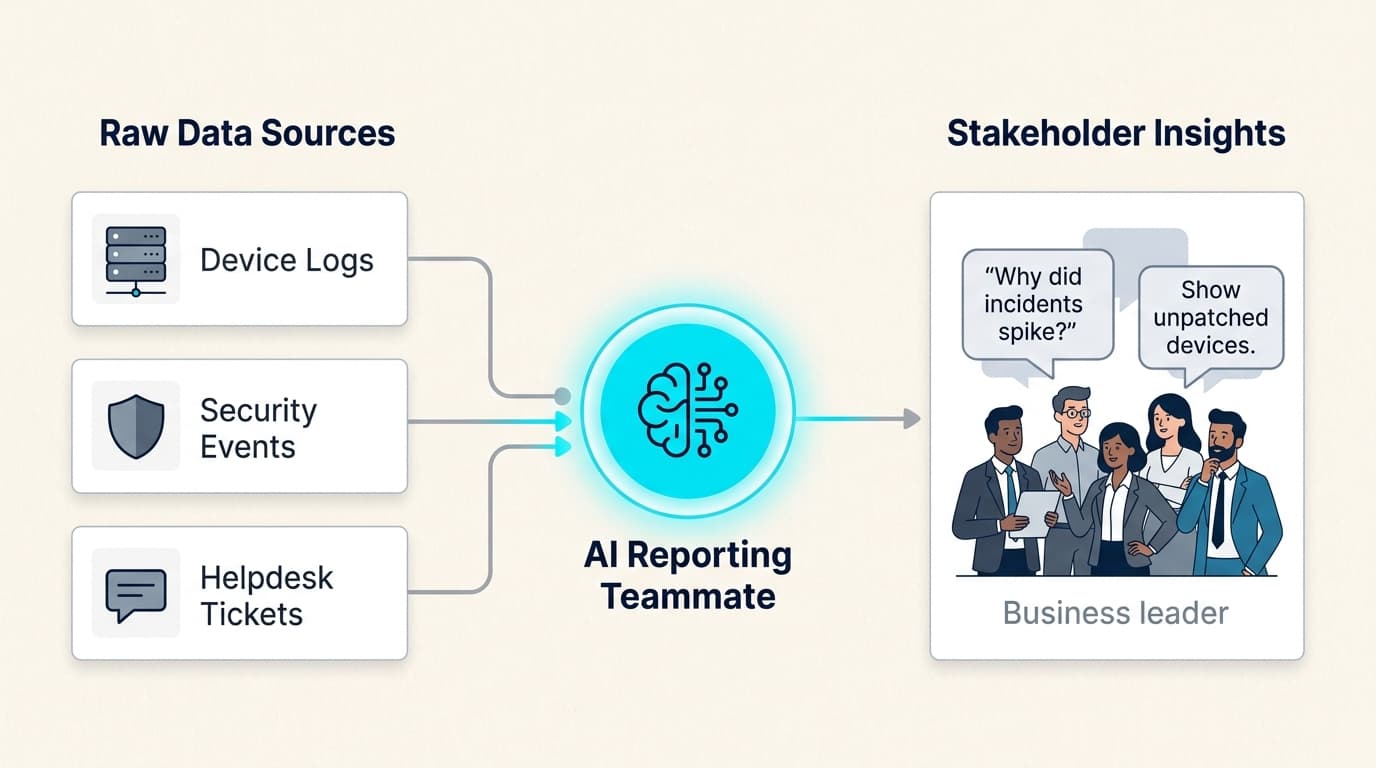
The difference between traditional and AI-augmented business intelligence is fundamental. In a traditional setup, you are limited to the dashboards that have already been built. If you need a new view, you need a technical expert to build it. AI-augmented BI reimagines this workflow by allowing you to ask questions in plain English.
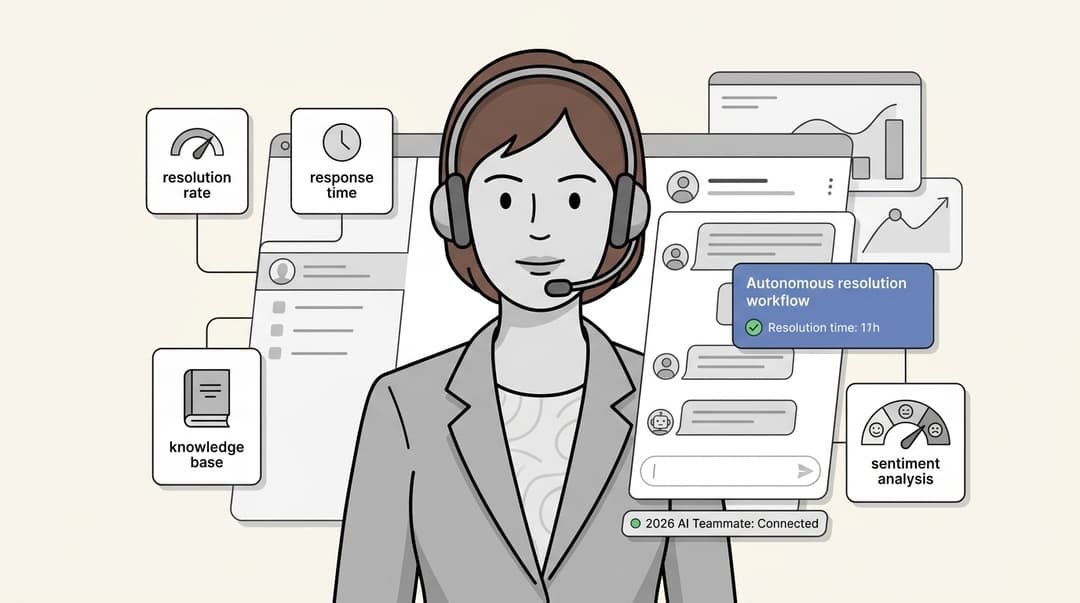
Think of it as the difference between a "tool" and a "teammate." A tool like a standard dashboard requires you to do the work of finding the insight. A teammate like eesel AI handles the reporting workflow for you. Instead of configuring software, you "hire" an AI Helpdesk Agent that learns your business context, identifies themes in your tickets, and surfaces gaps in your knowledge base automatically.
Why IT leaders are moving from dashboards to conversations
The shift from static dashboards to conversational reporting is driven by one primary factor: speed. In a modern IT environment, the cost of waiting is high. Whether you are auditing a device fleet for security vulnerabilities or trying to understand a sudden drop in user experience, getting answers in seconds rather than days is a competitive advantage.
Democratization of data
One of the biggest hurdles in IT management is that the people with the most strategic questions (IT Directors, Workspace Managers) often don't have the technical skills to query the raw data. AI reporting democratizes this process. It allows a non-technical manager to ask, "Which departments have the most unpatched Windows devices?" and get a detailed report instantly.
Proactive vs. reactive reporting
Traditional reporting is retrospective. It tells you what happened last month. AI for IT reporting is proactive. By continuously observing hybrid workspace endpoints and sessions, platforms like Flexxible can identify anomalies and pinpoint UX dips in real time. This allows IT teams to resolve incidents before they even reach the user.
Real-world impact
The productivity gains are measurable. According to research from Harvard Business School, specialists using AI completed 12.2% more tasks and did so 25.1% more quickly than those without. More importantly, the quality of the results was rated 40% higher. In an IT context, this means more accurate audits and faster resolution of systemic infrastructure issues.
Key use cases for AI in IT reporting
The applications for AI in IT reporting span from the helpdesk to the datacenter. Here are the most common ways we see teams implementing these tools in 2026.
Infrastructure monitoring and device health
Tracking a diverse fleet of physical and virtual endpoints is a massive reporting challenge. AI reporting tools like FlexxClient allow you to monitor device health and patch compliance through simple natural language questions. You can instantly generate reports on hardware end-of-life cycles or identify devices that are falling behind on OS updates without manually scouring spreadsheets.
Security patch audits and compliance
Security compliance requires constant vigilance. Instead of running a weekly manual audit, you can use AI to ask, "Show all devices with outdated antivirus software." This type of automated reporting ensures that vulnerabilities are identified and remediated immediately. For organizations under heavy European regulations, this focus on regulatory compliance and security is essential.
Helpdesk theme analysis
Traditional helpdesk reporting relies on manual tagging, which is notoriously inaccurate. Our AI Helpdesk Agent replaces this with automatic topic detection. It reads every ticket and identifies exactly what customers are asking about. This allows you to see sentiment trends and feature request rollups without asking your human agents to spend hours tagging tickets.
Predictive maintenance and forecasting
By analyzing historical indicators, AI can forecast future hardware needs and potential failures. This allows IT teams to move from a "break-fix" model to a predictive one. If the data shows a specific laptop model is prone to battery failure after 18 months, the AI can flag those devices for replacement before they fail in the field.
Regulatory compliance
For financial institutions and large enterprises, the reporting burden is immense. PwC's Project AIR study highlighted that some firms must report 340,000 data points across 67 different reports. AI helps by codifying these regulatory requirements and interpreting complex reporting rules to ensure that every submission is consistent and accurate.
Limitations of traditional reporting in the AI era
While the shift toward AI is inevitable, it is important to recognize where traditional methods still fail and where AI has its own challenges.
One major issue is the "Garbage In, Garbage Out" principle. AI reporting is only as good as the underlying data quality and normalization. If your device inventory is incomplete or your ticket data is messy, the AI will produce inaccurate insights.
There is also the lack of human intuition. AI is great at identifying a traffic spike, but it misses the "news event" context behind it. If a major software update was released that morning, a human knows why support volume is up, while an AI might just see it as an anomaly.
Finally, there is the risk of over-reliance on automation. Sidelining critical thinking in favor of AI-generated summaries can lead to missing subtle but important infrastructure trends. The goal is not to replace human analysts, but to unburden them from the manual work so they can focus on strategy.
Comparing the top AI reporting platforms in 2026
Which tool you need depends on your specific focus: helpdesk data, device fleets, or enterprise data warehouses.
| Platform | Best For | Key Differentiator |
|---|---|---|
| eesel AI | Helpdesk & Unstructured Data | Teammate model that learns from Zendesk and Slack in minutes. |
| Flexxible | IT Infrastructure & DEX | Unified management of physical and virtual endpoints. |
| Snowflake | Structured Data Warehouses | 90% accuracy in text-to-SQL conversions via Cortex Analyst. |
| Whatagraph | Marketing-Heavy IT | Simplest interface for talking to marketing and sales data. |
| Domo | Self-Service Analytics | Over 1,000 pre-built connectors for diverse data sources. |
Pricing model comparison
Different tools use different billing structures, from traditional subscriptions to modern consumption-based models.
| Platform | Pricing Model | Starting Price |
|---|---|---|
| eesel AI | Pay-per-task | $0.40 per regular task ($50 Free Trial) |
| Flexxible | Monthly Subscription | Contact sales for pricing |
| Snowflake | Consumption-based | Usage-based Snowflake credits |
| Whatagraph | Subscription | See official website for plans |
| Domo | Subscription | See official website for plans |
Snowflake Cortex Analyst
Snowflake's Cortex Analyst is built for organizations that have already consolidated their IT data into a Snowflake warehouse. It uses specialized agentic architectures to refine SQL outputs, achieving much higher accuracy than generic LLMs. It is particularly strong for high-precision structured data querying.
Flexxible (FlexxClient)
For managing a device fleet, Flexxible is hard to beat. Its "Create with AI - Reports" feature supports natural language queries in multiple languages including Spanish, Catalan, and Basque. This makes it a top choice for European enterprises that need to maintain DEX observability across physical and virtual workspaces.
eesel AI: Your autonomous reporting teammate
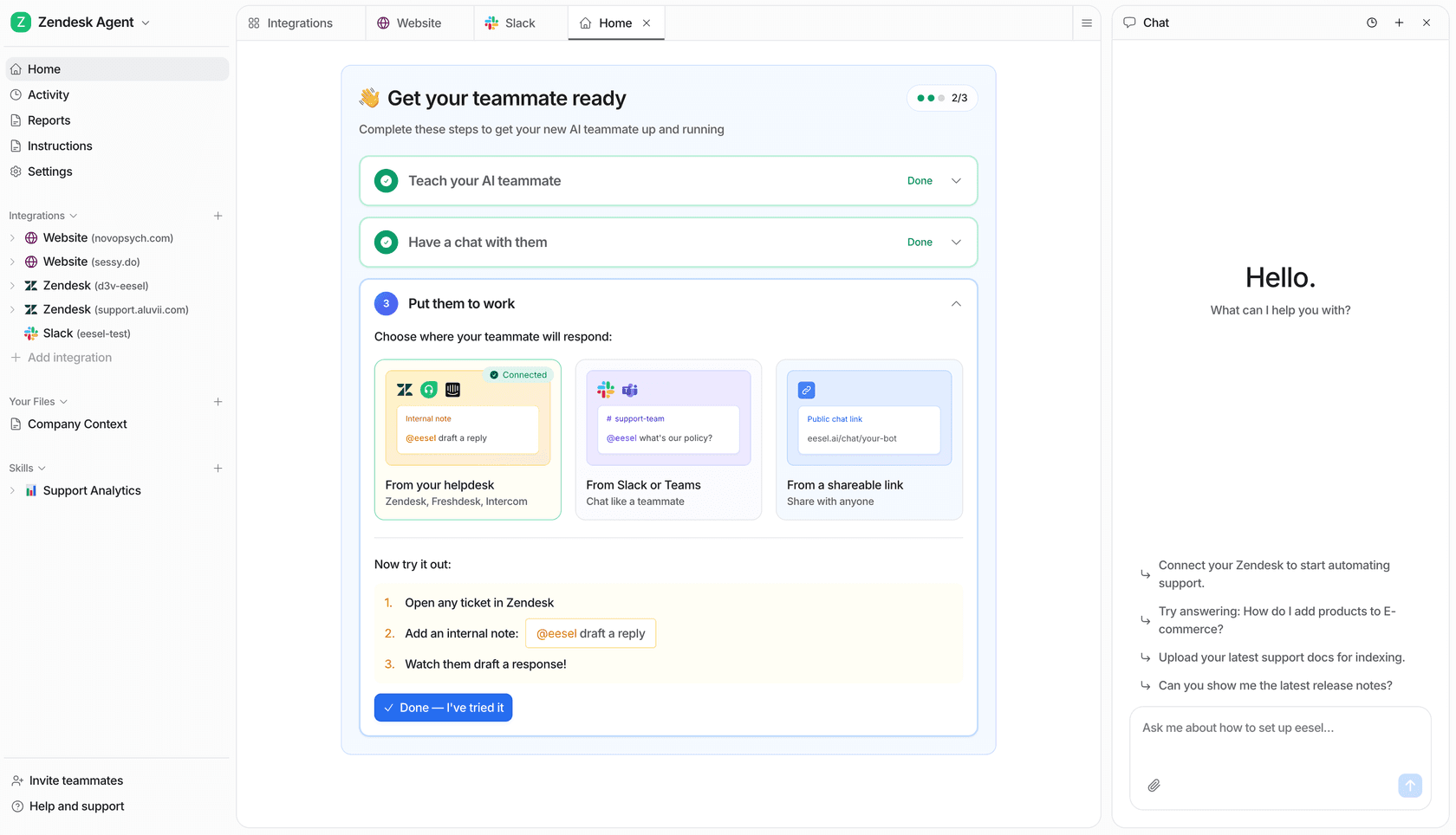
While many tools treat AI as a feature, we treat it as a hire. You don't "set up" eesel AI; you onboard it like a new team member. Our platform plugs into the tools you already use (Zendesk, Slack, Notion, Jira) and starts learning in minutes.
Topic detection and helpdesk insights
The biggest value we provide for IT reporting is the ability to analyze unstructured data. Most reporting tools can tell you how many tickets were opened. Our AI Helpdesk Agent can tell you what they were about. By automatically identifying what customers are asking about, we eliminate the need for manual tagging and provide a much clearer picture of your support landscape.
We also help you identify what you are missing. Our Knowledge Gap Identification feature analyzes ticket patterns to tell you where your documentation is falling short. If dozens of people are asking the same question about your VPN, eesel will flag that you need a new help center article.
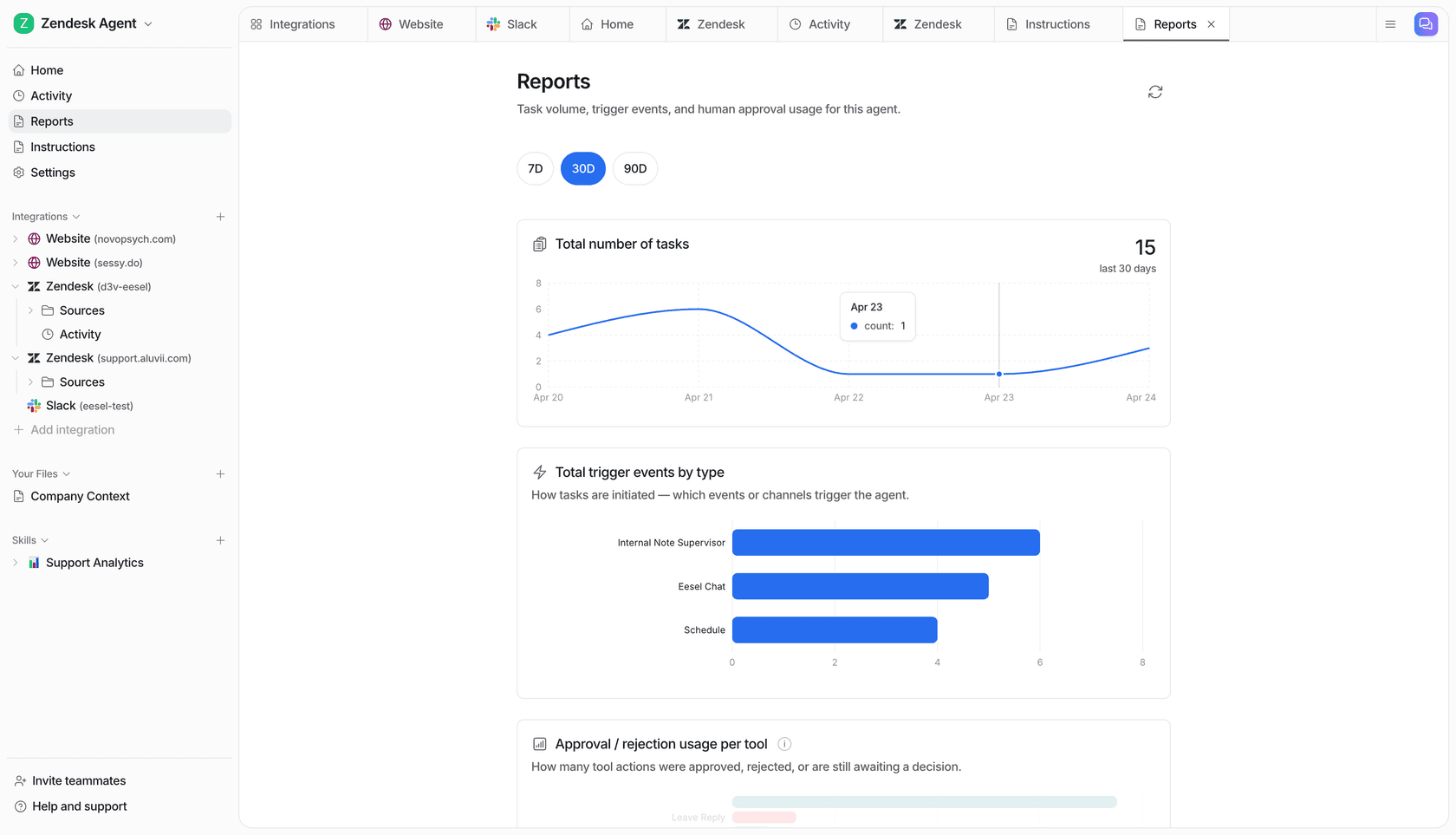
Transparent, usage-based pricing
We believe you should only pay for the work your AI actually does. There are no platform fees, no per-seat charges, and no monthly minimums.
| Task Type | Examples | Price |
|---|---|---|
| Light | Dashboard questions, simple lookups | Free |
| Regular | Support tickets, chat sessions | $0.40 each |
| Heavy | Blog post drafts | $4.00 each |
We also offer a Free Trial that includes $50 in free usage with all features unlocked. For larger organizations, our Enterprise tier sits at $2,100 per month and includes SSO, HIPAA compliance, and a dedicated account manager.
Start automating your IT reporting today
The era of staring at static dashboards and waiting for SQL reports is ending. In 2026, the most effective IT teams are those that treat their reporting as a conversation. By moving to an AI-powered model, you can democratize access to data, identify infrastructure trends before they become problems, and reclaim hours of time for your human team.
Ready to see how conversational reporting can transform your IT operations? You can hire your first eesel AI teammate today and start getting answers from your helpdesk data in minutes.

Frequently Asked Questions
Share this article

Article by
Stevia Putri
Stevia Putri is a marketing generalist at eesel AI, where she helps turn powerful AI tools into stories that resonate. She’s driven by curiosity, clarity, and the human side of technology.