AI agents need email addresses to interact with the world. Whether they're booking meetings, handling support tickets, or negotiating contracts, email remains the universal protocol for digital identity. But traditional email providers like Gmail weren't built for programmatic inbox creation at scale.
AgentMail fills this gap. Founded in 2025 as part of Y Combinator's Summer batch, AgentMail provides API-first email infrastructure designed specifically for AI agents. The company recently raised $6 million in seed funding led by General Catalyst, signaling strong investor confidence in this emerging category.

Let's break down what you get at each pricing tier and how to choose the right plan for your needs.
What is AgentMail?
AgentMail is an email inbox API that gives AI agents their own email addresses. Unlike Gmail or Outlook, which charge per inbox and impose rate limits, AgentMail lets you create inboxes programmatically through API calls.
The core idea is simple: your AI agent gets a real email address (like assistant@yourcompany.com) that it can use to send, receive, and manage emails autonomously. There's no manual setup, no OAuth flows, and no clicking through web interfaces.
Since launching in August 2025, AgentMail has attracted tens of thousands of human users and hundreds of thousands of agent users. The platform has processed over 10 million emails across more than 500 B2B customers, according to TechCrunch's coverage.
The founders (Haakam Aujla, Michael Kim, and Adi Singh) built AgentMail after struggling to build email agents on top of legacy providers. They found that Gmail and Outlook lack API support for creating new inboxes, charge monthly subscriptions per inbox, impose restrictive rate limits, and don't offer a great developer experience.
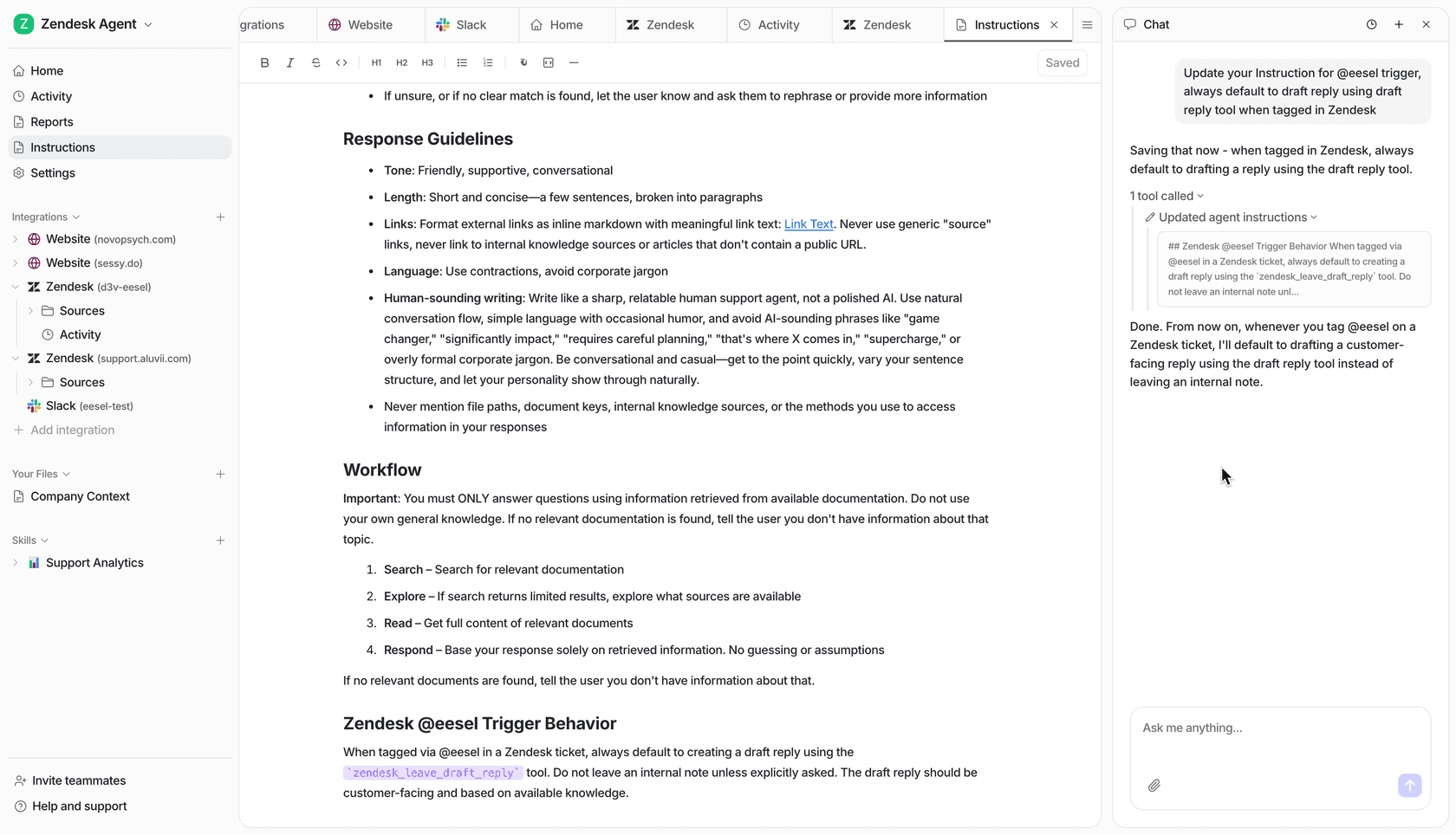
For teams building AI-powered customer service, we offer a complementary approach at eesel AI. While AgentMail provides the email infrastructure, our AI Agent handles the actual customer conversations, learning from your past tickets and help center to resolve inquiries autonomously.

AgentMail pricing plans at a glance
AgentMail offers four pricing tiers, from a generous free plan to custom enterprise solutions. Here's how they compare:
| Plan | Monthly Price | Inboxes | Emails/Month | Storage | Custom Domains | Best For |
|---|---|---|---|---|---|---|
| Free | $0 | 3 | 3,000 | 3GB | 0 | Individual developers testing the API |
| Developer | $20 | 10 | 10,000 | 10GB | 10 | Solo developers and small projects |
| Startup | $200 | 150 | 150,000 | 150GB | 150 | Growing teams with production workloads |
| Enterprise | Custom | Custom | Custom | Custom | Custom | Large organizations with compliance needs |
All paid plans include API access, webhooks, and the ability to send emails without daily limits. The Free plan caps you at 100 emails per day, as noted on their pricing page.
AgentMail also offers a launch promotion: early-stage startups can apply for a free month on the Startup tier.
Free plan details
The Free tier gives you 3 inboxes, 3,000 emails per month, and 3GB of storage. You get basic features like threading, labels, attachments, drafts, and scheduled sending. This plan is genuinely useful for prototyping and testing, not just a teaser.
Limitations include the 100 emails per day cap and no custom domains. Support's limited to community Discord access.
Developer plan details
At $20 per month, the Developer plan removes the daily sending limit and increases your capacity to 10 inboxes, 10,000 emails monthly, and 10GB storage. You can connect up to 10 custom domains and get email support.
This tier suits solo developers building side projects or early-stage products where email's a component but not the core offering.
Startup plan details
The Startup plan at $200 per month is where AgentMail becomes a serious infrastructure investment. You get 150 inboxes, 150,000 emails per month, 150GB storage, and 150 custom domains.
Key additions at this tier include dedicated IP addresses for better deliverability, a SOC 2 Type I report for compliance, and Slack channel support for faster assistance. You also get 10 inbox pods and 10 webhook endpoints (up from 2 on lower tiers).
Enterprise plan details
Enterprise pricing is custom and includes everything in Startup plus white-label platform options, EU region cloud deployment, bring-your-own-cloud deployment, and OIDC/SAML SSO for enterprise authentication. See AgentMail's enterprise page for full details.
This tier is designed for organizations with strict compliance requirements or those needing dedicated infrastructure.
Feature breakdown by tier
Beyond the basic limits, here's what features are available at each level:
Core features (all plans)
Every plan includes the fundamentals: email threads, labels, attachments, drafts, schedule send functionality, SDKs for Python and Node.js, and MCP Server support.
Advanced features
Inbox Pods, webhook endpoints, websockets, metrics, and SMTP relay are available on all tiers but with different limits. Free and Developer plans get 2 inbox pods and 2 webhook endpoints. Startup plans get 10 of each.
White-label options, EU Cloud hosting, and bring-your-own-cloud deployment are Enterprise-only.
Deliverability features
All plans include DKIM, SPF, and DMARC authentication as well as optimized shared IP pools. Custom domains start at the Developer plan (10 domains). Dedicated IPs become available at the Startup tier.
Security features
Team member limits scale with your plan: 2 members on Free/Developer, 10 on Startup. Social SSO and multi-factor authentication are available on all paid plans. Signed webhooks and SOC 2 reports start at Startup. OIDC/SAML SSO is Enterprise-only.
Understanding AgentMail's usage-based model
The most important thing to understand about AgentMail pricing is that it's not per-inbox. Traditional email providers like Google Workspace charge around $14 per inbox per month. If you're running 50 AI agents, that's $700 monthly before you send a single email.
AgentMail flips this model. You pay for capacity (inboxes and email volume) rather than per-inbox subscriptions. Here's how the math works out:
Scenario: 50 AI agents
- Google Workspace: ~$700/month (50 inboxes × $14)
- AgentMail Startup: $200/month (150 inboxes included, 150K emails)
Scenario: 10 AI agents
- Google Workspace: ~$140/month
- AgentMail Developer: $20/month (10 inboxes included)
The savings become significant as you scale. More importantly, you avoid the operational overhead of managing individual inbox subscriptions and the rate limits that traditional providers impose on API access.
However, there's a trade-off. AgentMail is API-only. There's no Gmail-style interface for browsing emails. If your use case requires human oversight of agent communications, you'll need to build that interface yourself or use a different tool. This is where a complete AI customer service solution like eesel AI differs, we provide both the AI and the interface your team actually uses.
Which plan is right for you?
Let's match use cases to plans.
Individual developers and hobbyists
Start with the Free plan. Three inboxes and 3,000 emails per month is enough to prototype most agent applications. The 100 emails per day limit only becomes restrictive if you're doing high-volume testing.
Upgrade to Developer ($20/month) when you need custom domains for professional credibility or when you hit the daily sending limit consistently.
Startups and small teams
The Developer plan works for early-stage products with low email volume. Move to Startup ($200/month) when:
- You need more than 10 inboxes
- You're sending more than 10,000 emails monthly
- Deliverability becomes critical (dedicated IPs help)
- You need SOC 2 compliance for enterprise customers
Growing companies
The Startup plan is designed for production workloads. At $200 for 150 inboxes, you're paying $1.33 per inbox (compared to $14+ with traditional providers). The dedicated IPs and SOC 2 report are table stakes for B2B SaaS companies.
Enterprise organizations
Contact sales for Enterprise pricing if you need:
- White-label platform (offer email under your own brand)
- EU data residency for GDPR compliance
- Bring-your-own-cloud deployment
- SAML/OIDC SSO integration
AgentMail vs. alternatives
AgentMail isn't the only option for agent email infrastructure. Here's how it compares to alternatives:
Traditional email (Gmail, Outlook)
Google Workspace and Microsoft 365 charge per inbox and weren't designed for programmatic creation. They impose rate limits that throttle agent workflows. However, they offer mature UIs and extensive integrations.
Choose traditional email if humans need to monitor and respond to emails alongside agents. Choose AgentMail if agents operate autonomously at scale.
LobsterMail
LobsterMail is a newer competitor positioning itself as a simpler, cheaper alternative. Their Builder plan starts at $9 per month (vs. AgentMail's $20) and they emphasize "zero-config agent signup" where agents can provision inboxes without API keys.
Key differences:
- LobsterMail's free tier has no inbox limit (AgentMail caps at 3)
- LobsterMail includes built-in prompt injection protection
- AgentMail has more mature enterprise features (SOC 2, dedicated IPs)
- AgentMail has stronger YC backing and funding
For hobbyists and small projects, LobsterMail's lower price point is attractive. For production B2B applications, AgentMail's compliance certifications and infrastructure maturity matter more. If you're evaluating AI tools for your support stack, check out our guide to the best AI helpdesk tools for a broader comparison.
Transactional email (SendGrid, Mailgun)
Services like SendGrid and Mailgun are designed for sending notifications, not for two-way agent communication. They don't provide inboxes for receiving email or threading for conversation management.
Use transactional email for one-way notifications. Use AgentMail (or similar) when agents need to receive replies and maintain conversation context.
eesel AI for customer service
If your AI agents handle customer support specifically, eesel AI offers a different approach. Rather than providing raw email infrastructure, we provide a complete AI teammate that learns from your help center and past tickets to resolve customer inquiries autonomously.
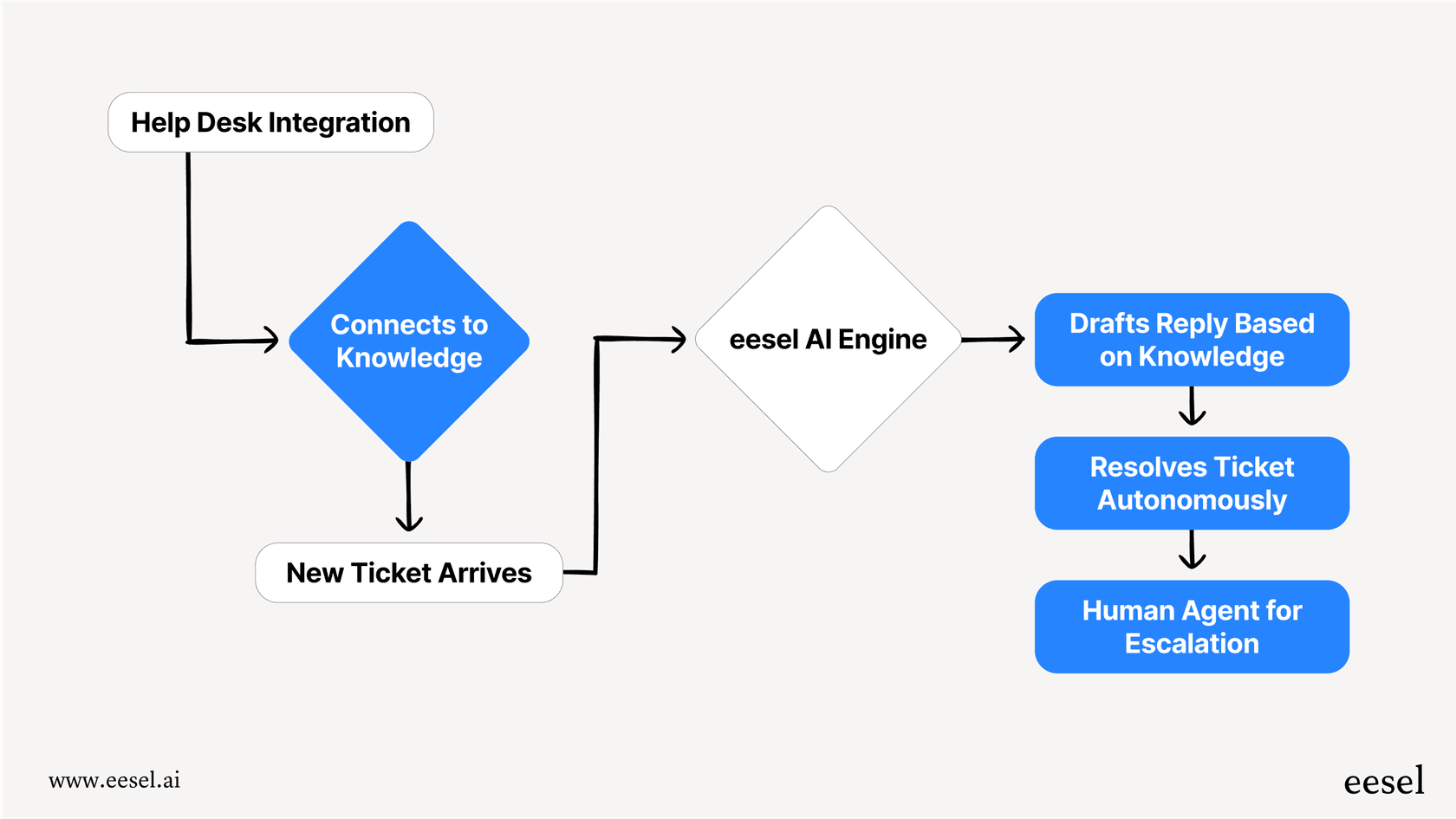
Our AI Agent integrates with your existing help desk (Zendesk, Freshdesk, Intercom) and can achieve up to 81% autonomous resolution rates. You don't need to build the agent logic yourself, we handle the natural language understanding, response generation, and escalation decisions.
Getting started with AgentMail
If AgentMail fits your needs, here's how to begin:
- Sign up at console.agentmail.to (no credit card required for Free plan)
- Generate an API key from the dashboard
- Install the SDK:
pip install agentmailornpm install agentmail - Create your first inbox via API call
- Start sending and receiving emails programmatically
The documentation at docs.agentmail.to includes quickstart guides and API references. The platform also offers a playground for testing API calls without writing code.
For teams building AI customer service agents, we invite you to compare approaches. While AgentMail gives you the infrastructure to build from scratch, eesel AI provides a trained AI teammate that works out of the box with your existing help desk. You can start with either approach, many teams begin with infrastructure and graduate to specialized platforms as their needs mature.