

What Grammarly actually is (briefly)
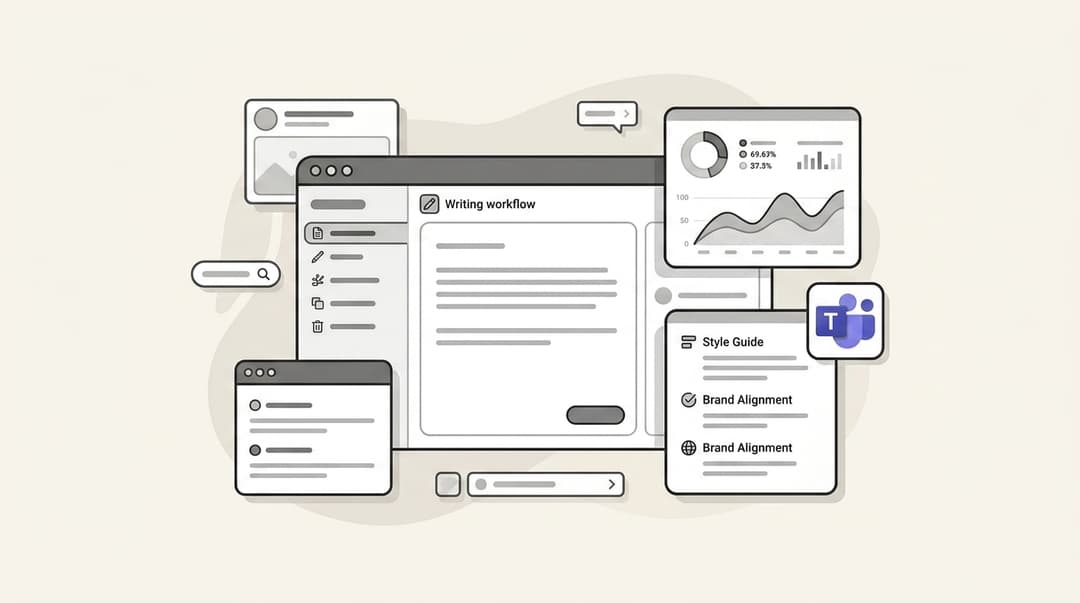
Grammarly is an AI writing assistant used by 40 million people and 50,000 organizations including Atlassian, Databricks, Zoom, HackerOne, and Zapier. It runs as a browser extension, a desktop app, and natively inside Google Docs, Word, Gmail, Outlook, Slack, and 1 million+ other apps. It started as a grammar checker in 2009 and has expanded into tone detection, full-sentence rewrites, plagiarism detection, AI-generated text detection, and team-wide style enforcement.
In late 2025, Grammarly became part of the Superhuman product family alongside Superhuman Mail and Coda. That rebrand affects how the pricing tiers work at the top end - more on that in the Superhuman context section below.
Grammarly plans at a glance
| Plan | Monthly billing | Annual billing | Annual total | Best for |
|---|---|---|---|---|
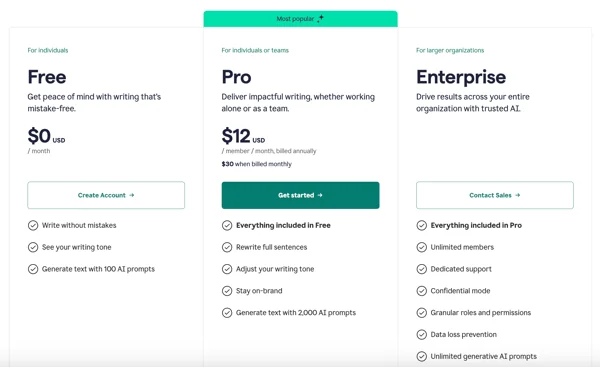
| Free | $0 | $0 | $0 | Casual writers, basic corrections |
| Pro | $30/member/month | $12/member/month | $144/member/year | Professionals, teams up to 149 |
| Superhuman Business | $40/member/month | $33/member/month | $396/member/year | Teams wanting email + writing tools |
| Enterprise | Contact Sales | Contact Sales | Custom | Large orgs, SSO, BYOK security |
Note: Grammarly Plus is a region-specific plan available in select countries with the same features as Pro. It is not compatible with discounts and not available to users who already have Premium, Pro, or Business. If you're outside the US and see "Plus" at checkout, it's essentially the same product as Pro.
A quarterly billing option also exists for standalone Pro: $60 for three months ($20/month averaged), which sits between monthly and annual in both cost and commitment.
Free plan: what you actually get
The free tier is genuinely useful, not a crippled demo. It covers:
- Grammar, spelling, and punctuation in real time
- Tone detection (you see what tone your writing reads as - confident, apologetic, formal, etc.)
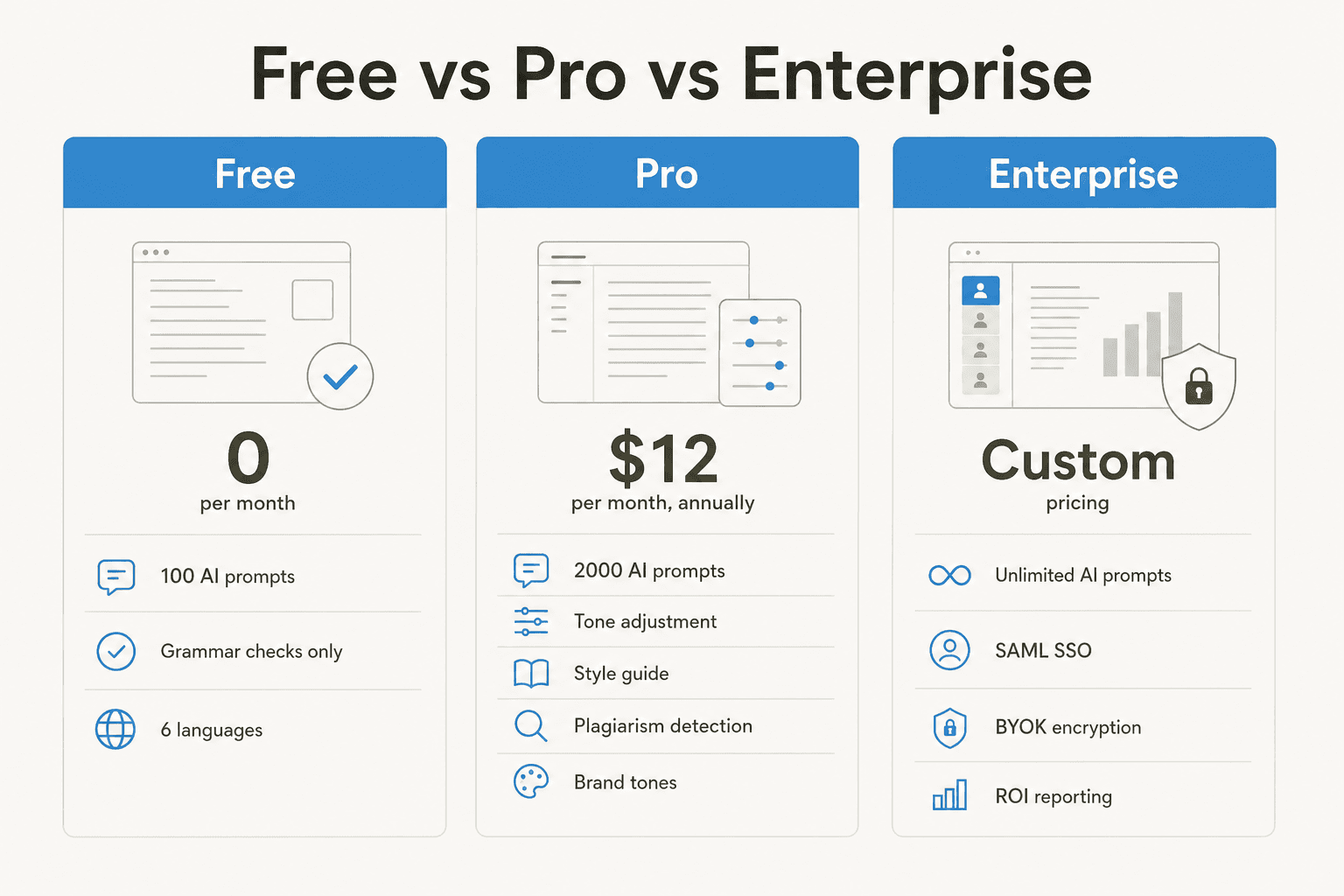
- Writing suggestions across 6 languages: English, Spanish, French, German, Italian, and Portuguese
- 100 AI prompts per month (ask Grammarly to rewrite a paragraph, generate a reply, or explain a suggestion)
- Works everywhere the extension runs: Gmail, Outlook, Google Docs, Word, Slack, LinkedIn, and a million other apps
What it cannot do: adjust the tone (you can see it, but you can't one-click-change it), rewrite full sentences, detect plagiarism, detect AI-generated text, or access team features. The plagiarism checker and AI detection are Pro-only.
The 100 AI prompts resets monthly. It's enough for occasional use - drafting a tricky email or clarifying a paragraph a few times a week. Not enough if you're using AI rewriting as a regular part of your workflow.
Our take: For students, casual writers, and anyone who just wants their grammar caught, free works well. The suggestion to "upgrade to see more" pops up regularly, but the actual useful-for-correctness features are genuinely unlocked.
Pro plan: what changes at $12/month (annual)
Pro is where Grammarly becomes a different tool. The features list is long, but a few things actually change how you write:
Full-sentence rewrites. Not just word swaps - click "Rewrite" and Grammarly restructures the whole sentence for clarity, conciseness, or formality. This is the feature most casual users upgrade for.
Tone adjustment. Free shows you your tone; Pro lets you change it. If Grammarly flags an email as sounding "blunt," you can accept a suggestion that softens it without rewriting manually.
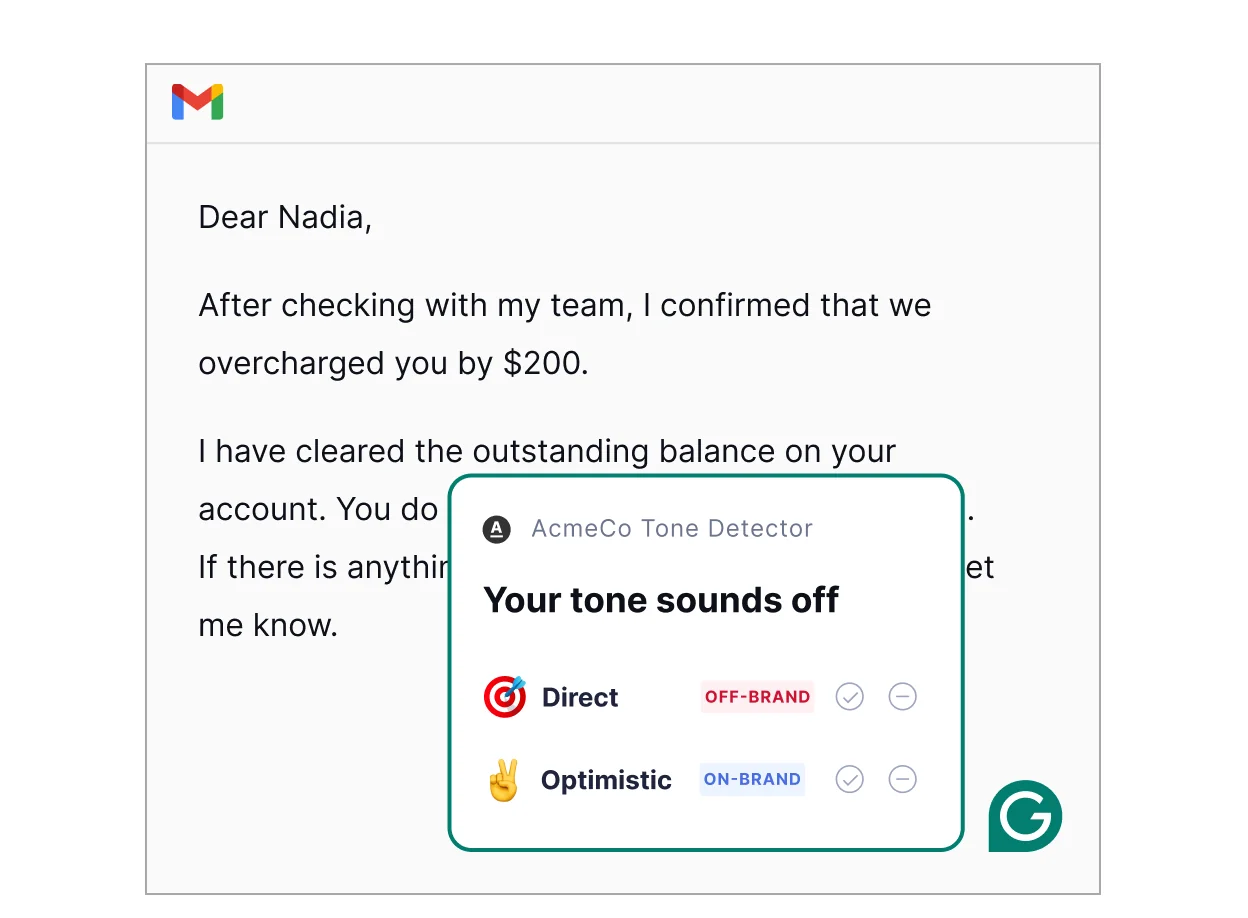
Plagiarism detection. Scans against billions of web pages and academic sources. Relevant for content teams worried about duplicate content, students submitting papers, and anyone writing for publication.
AI writing detection (Authorship). Flags when text is likely AI-generated. Useful for editors reviewing freelancer submissions and educators checking student work.
2,000 AI prompts per member per month. That's 20x the free tier - enough to run AI rewriting as part of a real workflow, not just occasional use.
Style guide (1 per team). Upload your brand voice guidelines and Grammarly flags deviations in real time. If your brand always writes "customer" not "client," or uses the Oxford comma, Grammarly will catch inconsistencies.
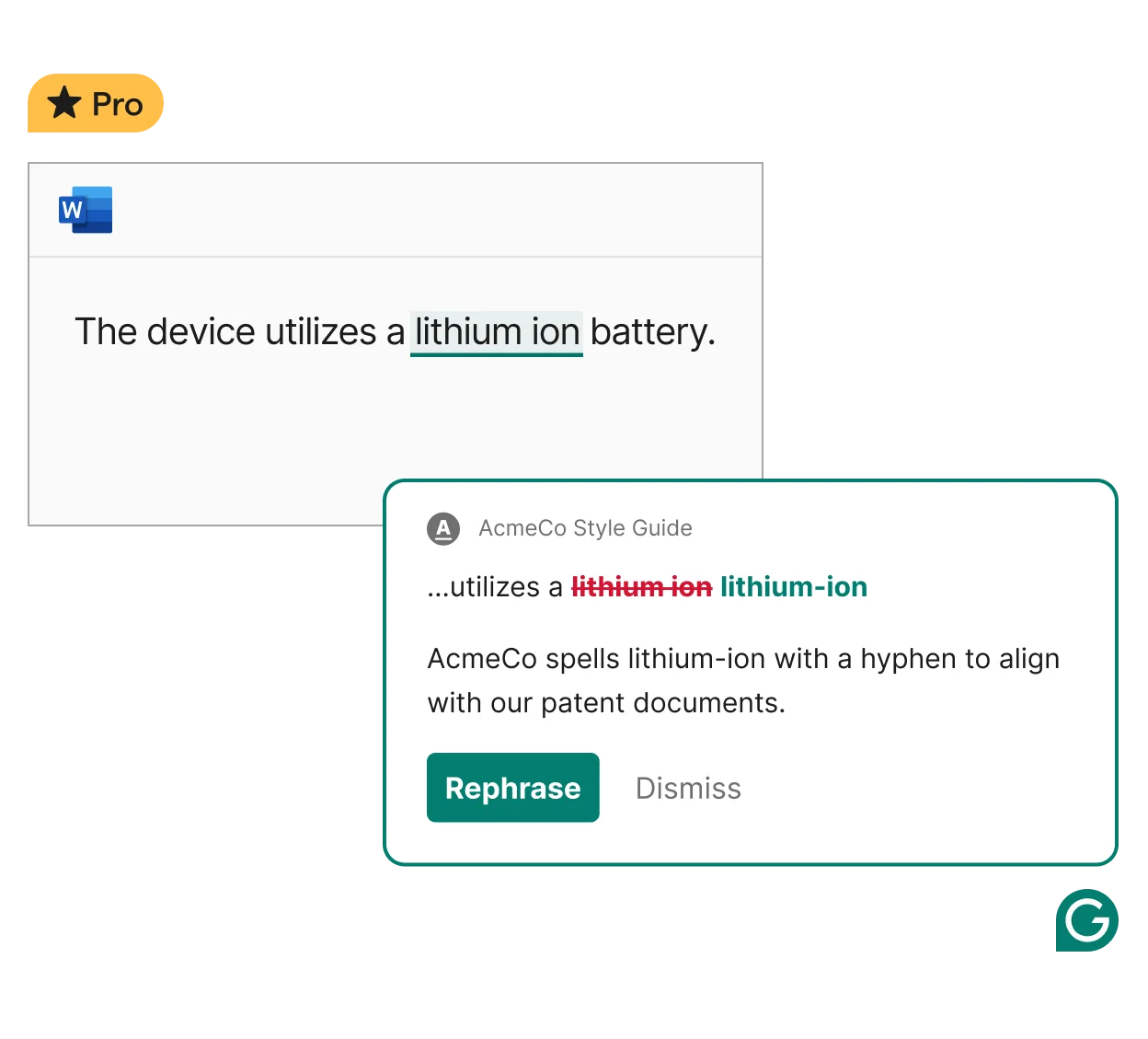
Brand tones (1 per team) and Knowledge Share. Knowledge Share surfaces company-specific information - product names, terminology, partner spellings - as suggestions when team members write. Snippets let you save reusable text blocks for standard responses.
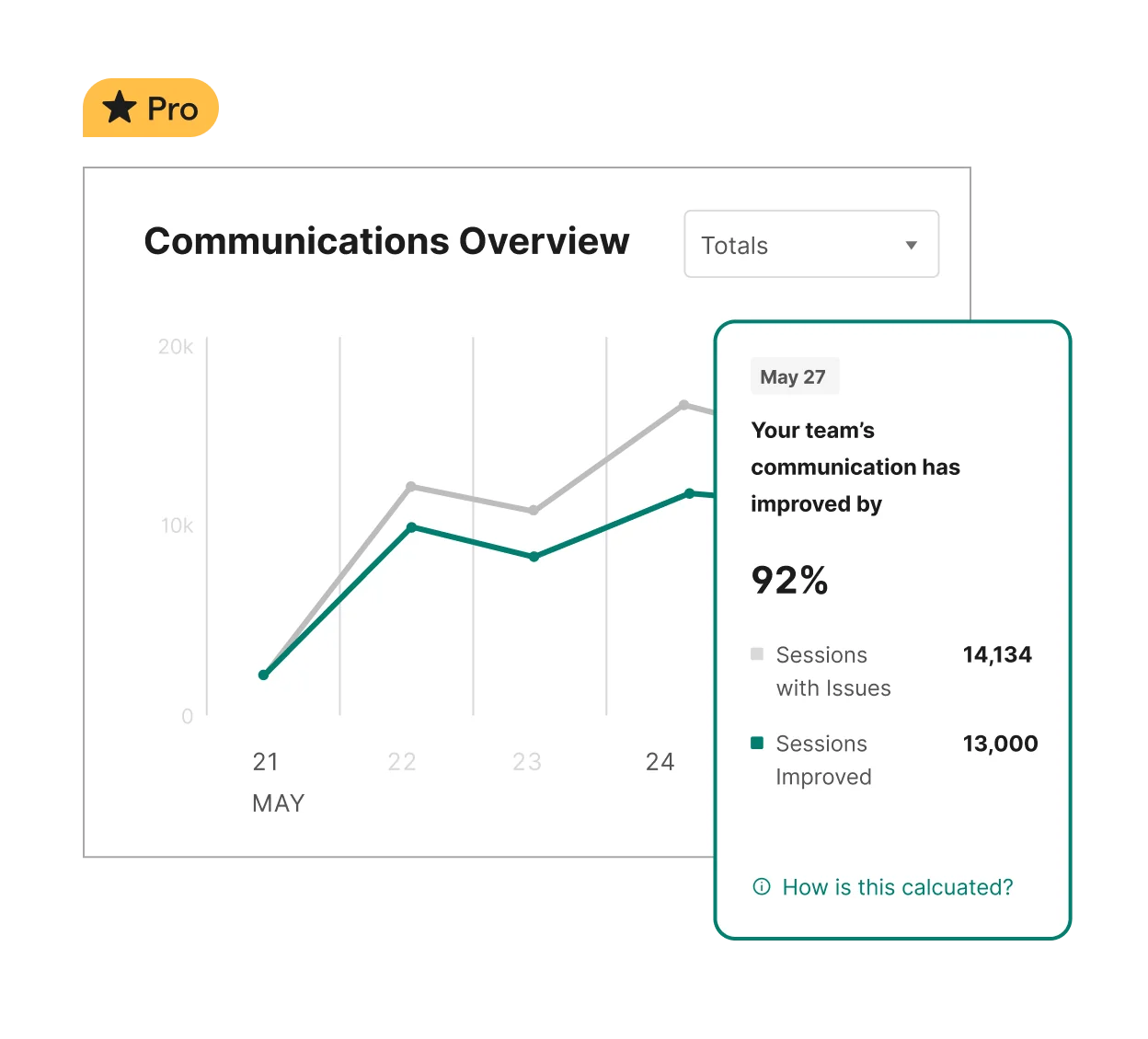
Team Analytics dashboard. Shows communication improvement trends across the team, session counts, and improvement rates. Available to Pro team admins.
Seat limits. Pro supports up to 149 members. Additional seats are prorated based on days remaining in your current subscription period. If you need 150+ seats, that pushes you toward Enterprise.
On G2, Grammarly has 4.7/5 from 12,969 reviews (Winter 2026 Grid Report top ranked). The vast majority of rating and sentiment data concerns the product - it's genuinely well-liked by daily users.
"I used to spend 20-30 hours a week reviewing, rewriting, and coaching. Grammarly has cut that by at least half, and that's allowed my team to scale without scaling."
Neil Hamilton, Head of Editorial, Databricks
Superhuman Business: the $33/month tier
The Business tier in the Superhuman suite ($33/member/month annual, $40/month monthly) is meaningfully different from just "more Grammarly." It includes:
- Everything in Grammarly Pro
- Superhuman Mail - a premium email client built around saving 4 hours per week on inbox management
- AI inbox organization
- Data sync from Jira, GitHub, and Figma into collaborative docs (via Coda)
If your team already uses or wants Superhuman Mail (the email client) and Coda (the doc editor), this tier makes the bundle pricing reasonable. If you just want better AI writing tools for your team, the standalone Pro plan at $12/month/seat is the right call - you'd be paying an extra $21/seat/month for email features you may not use.
As a reference, at 20 seats:
- Pro annual: $12 x 20 x 12 = $2,880/year
- Business annual: $33 x 20 x 12 = $7,920/year
That $5,040 difference is the price of the Superhuman Mail bundle. It's a good deal if you'd otherwise buy Superhuman separately; it's expensive if you just want writing assistance.
Enterprise: what you get for custom pricing
Enterprise is available through Superhuman Go (Grammarly's cross-app AI layer) and adds security and admin features that Pro lacks:
- SAML SSO and SCIM provisioning - central identity management via Okta, Azure AD, etc.
- BYOK encryption (Bring Your Own Key / Enterprise Key Management) - your data encrypted with your keys
- Data loss prevention - flag or block outbound sharing of sensitive content
- Audit Logs API - export all writing activity for compliance review
- Unlimited style guides, brand tones, and user groups (Pro is limited to 1 each)
- ROI reporting and Effective Communication Score - quantify writing improvement for management
- Dedicated support and a success team
Grammarly holds SOC 2 Type 2 certification covering security, privacy, availability, and confidentiality. The trust page covers the full security posture.
No public pricing exists. Typical SaaS enterprise contracts run 1-3 years; Grammarly Enterprise is generally negotiated annually with volume discounts for large deployments. If you're running 500+ seats, expect a custom quote that's significantly below list rate.
The billing math: monthly vs annual
The gap between Grammarly's billing options is large enough to be a meaningful financial decision.
| Billing | Monthly cost | Annual total | 3-year total |
|---|---|---|---|
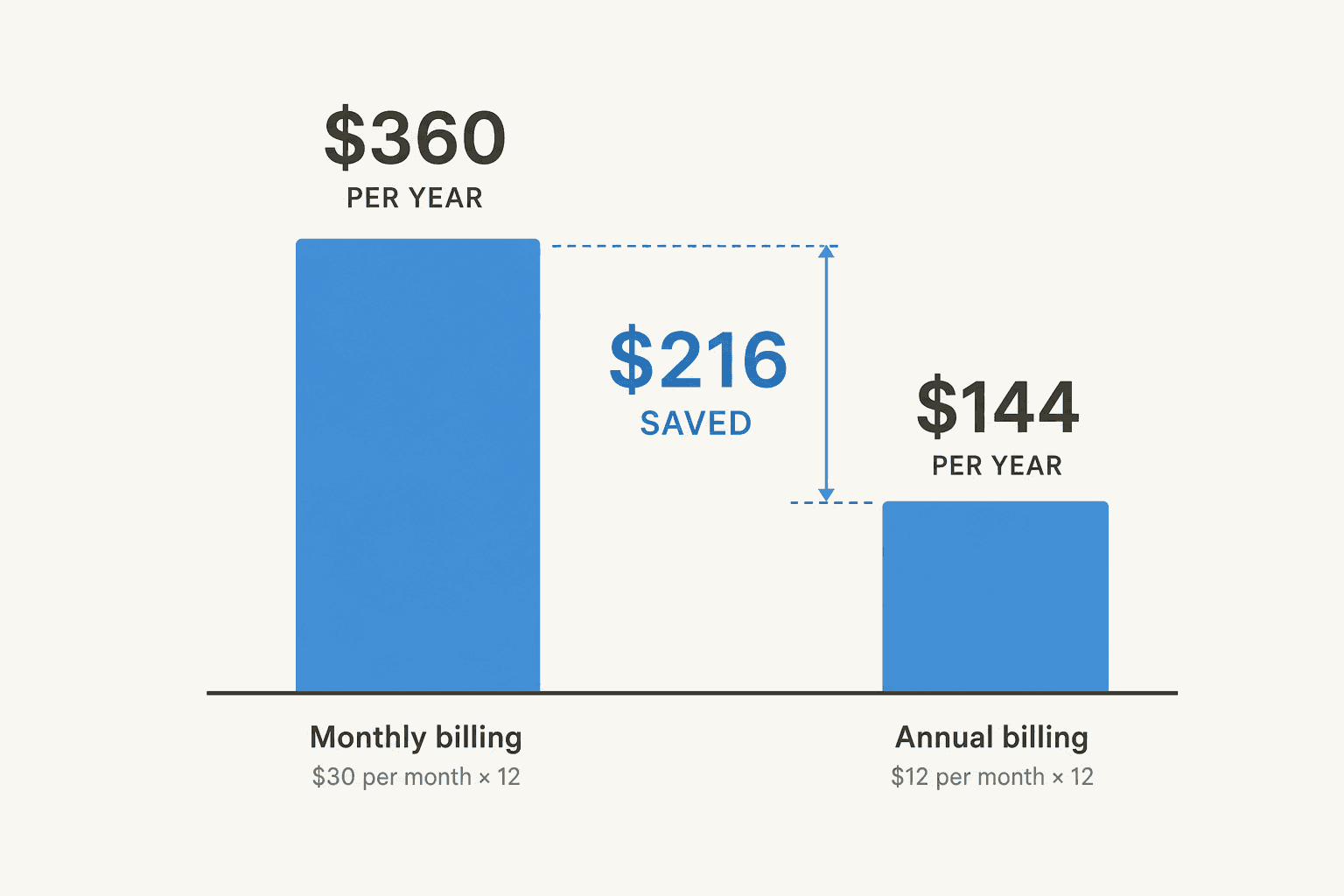
| Monthly | $30/member | $360/member | $1,080/member |
| Annual | $12/member | $144/member | $432/member |
| Savings | - | $216/member | $648/member |
At $216/year per seat, the break-even point for annual over monthly is 4.8 months of actual usage. If you're reasonably confident you'll use Grammarly Pro for more than 5 months in a year, annual billing is the obvious choice.
For a 10-person team switching from monthly to annual billing:
- Monthly: $30 x 10 = $300/month = $3,600/year
- Annual: $12 x 10 = $120/month = $1,440/year
- Savings: $2,160/year
One nuance: Grammarly's help docs confirm that annual billing charges the full $144 upfront, not $12/month. Monthly is genuinely billed monthly at $30. Quarterly billing ($60 for three months) is a middle option if you want to test Pro without a year-long commitment.
The $144 auto-renewal trap
This deserves its own section because it's the most common source of user frustration with Grammarly, and it's entirely avoidable.
Grammarly's refund policy states it only refunds when legally required. The Better Business Bureau gives Grammarly a 1.04/5 rating from 49 customer reviews - nearly all of them billing-related, not product-related. The contrast with G2's 4.7/5 from 12,969 reviews is striking: users who chose to pay for Pro generally love the product. Users who got a surprise $144 charge without warning mostly did not.
Two representative BBB complaints from early 2026:
"We distinctly remember canceling Grammarly last year after we were charged $144 for an account that our son was no longer going to use. We have now been charged $144 for this year... We explained the situation via the form on their website, and they said that they were not legally obligated to refund our money."
Kara I., BBB review, February 2026
"I tried a free trial for pro with the knowledge that it would be billed at $12 monthly. Instead I was charged $144 for an annual package without my consent."
Meredith H., BBB review, September 2025
The pattern: users sign up for a free trial, see "$12/month" in the marketing, don't notice the "billed annually" qualifier, and discover 12 months later that $144 has charged again. Grammarly does send renewal reminders - but if those go to a dormant email, you won't see them.
How to avoid it:
- Set a calendar reminder for 14 days before your renewal date.
- Manage your subscription at account.grammarly.com/subscription - you can view the next renewal date there.
- If you're managing a team, use Grammarly's admin billing dashboard to track renewals across seats.
Is Grammarly Pro worth it?
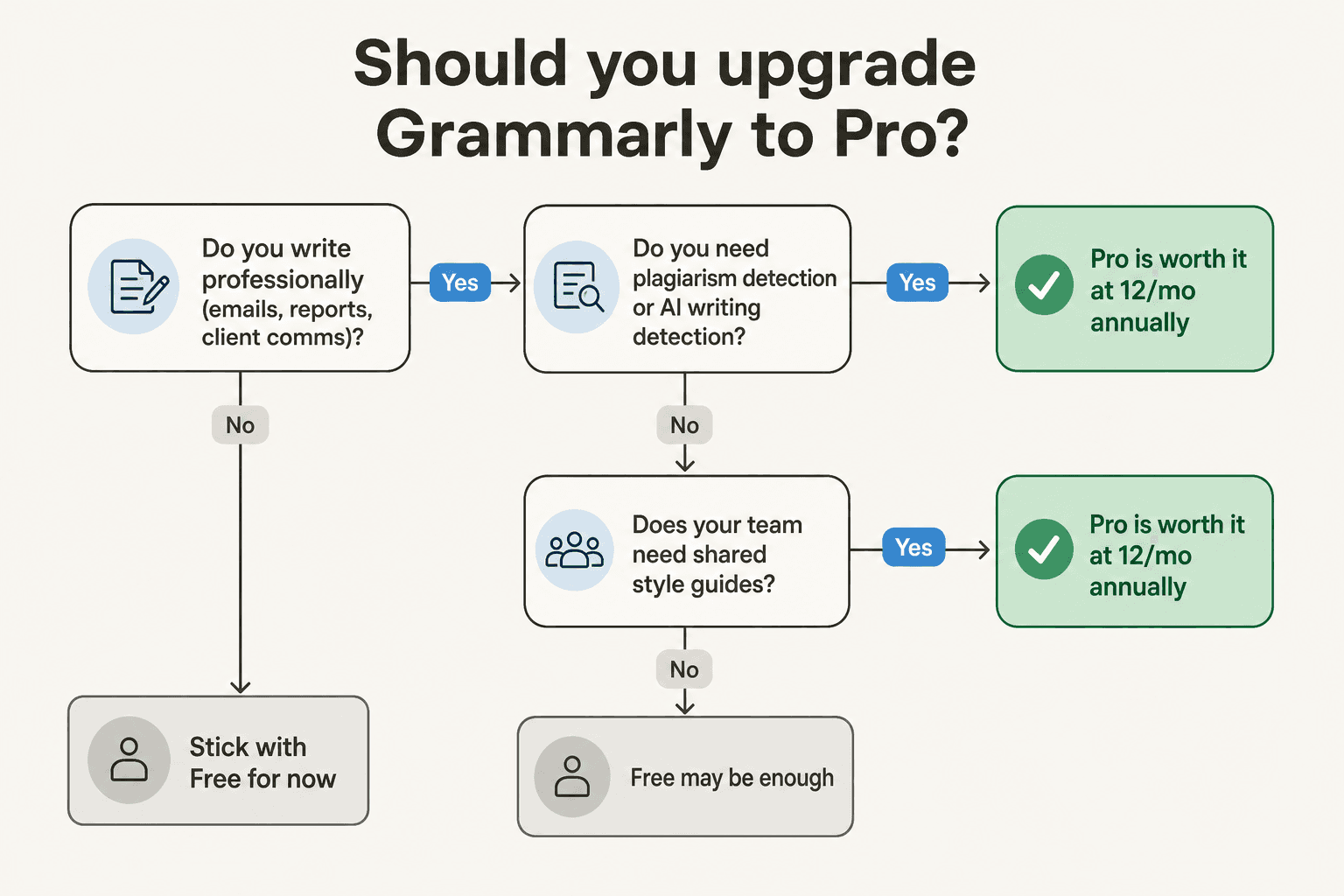
The honest answer depends entirely on how much you write and what you write for.
Worth it for:
- Professionals who write customer-facing emails, reports, or documentation every day. At $12/month, the ROI from even a few hours of editing time saved is positive.
- ESL and non-native English writers. Tone adjustment and fluency suggestions are a genuine quality-of-life improvement for second-language writers.
- Content and marketing teams needing consistent brand voice across 5+ writers. One style guide paying for itself in reduced editing rounds.
- Anyone submitting work to publication and needing plagiarism clearance.
Probably not worth it for:
- Casual personal use where free grammar checks are sufficient.
- Writers who primarily use ChatGPT or Claude for rewrites - there's meaningful overlap in the rewriting features.
- Development and technical teams where most writing is code comments and Slack messages.
On LinkedIn, a practitioner's 2025 writing tool experiment put it plainly:
"For proofreading, use Grammarly. It's time-consuming, and I have found no way around it. For revisions, use ChatGPT."

The honest summary: Grammarly Pro has a narrow but deep edge for real-time proofreading across every app you use. For longer-form rewriting, AI writing tools like ChatGPT have caught up significantly. The practical recommendation for many teams is Grammarly Free or Pro for correctness, plus an AI writing generator for content drafting - not one tool trying to do both.
For teams wanting Grammarly alternatives or a Grammarly vs QuillBot comparison, we've covered those separately. ProWritingAid is the most frequently cited alternative on Reddit, particularly because it offers a lifetime license (~$399 one-time) that compares favorably to Grammarly's perpetual subscription.
Grammarly and Superhuman: what changed in 2026
In 2025, Grammarly joined the Superhuman family alongside Superhuman Mail (the fast, AI-assisted email client) and Coda (the docs/database tool). The merger positioned Grammarly as the writing layer of a broader productivity suite rather than a standalone tool.

What this means practically for Grammarly pricing:
- Subscription management for suite users is now handled under the Grammarly account, but changes apply across Superhuman, Coda, and Grammarly simultaneously.
- Enterprise delivery is via Superhuman Go, the proactive cross-app AI agent layer.
- Grammarly Pro remains a standalone purchase - the suite tiers are additive, not replacements.
One analyst note from X worth flagging:
"Grammarly is a textbook example of a company suffering from value migration. They're not a particularly capable AI company, so they keep acquiring others like Coda and Superhuman to create a story of relevance."
Worth holding alongside the G2 and Capterra data as a counterweight. The product is well-rated by daily users; the question for long-term subscribers is whether the suite strategy pays off in features they actually use.
Also worth noting: in March 2026, Grammarly faced criticism over its Expert Review feature, which briefly attached real writers' names to AI-generated feedback without their consent. Grammarly apologized and removed the feature. It doesn't affect the pricing calculation, but it's context worth having for anyone evaluating Grammarly's AI writing tools for their team.
Discounts and special pricing
A few discount options exist that most users miss:
- Student and educator discount: 50% off via SheerID verification. One discount period only - you can't stack this or apply it at renewal.
- Team invoicing: For 10+ members on annual Pro, Grammarly can issue invoices payable by bank transfer (ACH/wire) or major credit cards. Request invoicing through account settings.
- Regional pricing: Available in Euros, British pounds, and Indian rupees - shown at checkout if your billing address qualifies.
Grammarly does not offer gift subscriptions, lifetime plans, one-time purchases, or general coupon codes.
Try eesel
If you're running a support team and paying for Grammarly Pro to help agents write better ticket responses, eesel takes that a step further. Instead of polishing what a human writes, eesel deploys AI agents directly inside Zendesk, Freshdesk, Slack, and 100+ other tools to draft and send responses automatically - handling routine tickets end-to-end without requiring an agent to write anything in the first place.

Teams briefing an eesel agent feel like onboarding a new employee - plain-language instructions, no prompt engineering required. When the goal is fewer tickets requiring human writing rather than better-polished human writing, eesel and Grammarly address different ends of the same problem. See how eesel works.
Frequently Asked Questions
How much does Grammarly Pro cost in 2026?
Is Grammarly free forever?
What is the difference between Grammarly Free and Pro?
Can I get a refund from Grammarly?
What happened to Grammarly Business?


Article by
Rama Adi
Rama is a software engineer at eesel AI with two years of experience writing about B2B SaaS, AI tools, and customer support technology. Based in Bali, Indonesia, he brings a developer's perspective to product comparisons — cutting through marketing copy to what the integrations and APIs actually do.